
Why Some Composters Smell — and Others Don’t
For many households, the biggest concern when choosing a food waste or composting system isn’t the price — and it’s not even whether it truly reduces waste. It’s a much more practical question: Will it smell?
Some users find that even when they follow the instructions carefully and clean the unit regularly, unpleasant odors still appear. Others, using a different type of system, report that they barely notice any smell at all during daily use.
So where does the difference come from? In most cases, it has little to do with user behavior, and much more to do with the system’s design logic and operating principles.
Before we go further: not all systems break down food waste the same way
Despite often being grouped under the same labels, not all “composting” or “food waste processing” systems handle organic waste in the same way.
Traditional composting relies on manual turning and requires careful control of moisture levels and carbon-to-nitrogen ratios. Many electric countertop units use high heat to dry food waste and grind it into small particles, slowing spoilage by removing moisture. Another category of systems uses controlled mixing, temperature regulation, and managed microbial environments to accelerate natural biological decomposition.
This article does not focus on specific brands. Instead, it looks at the underlying decomposition mechanisms and system design choices that explain why some systems are more prone to odor issues, while others remain stable and pleasant to use.
Where composting odors actually come from
To understand why odors form, it helps to look at what happens to food waste during the breakdown process.
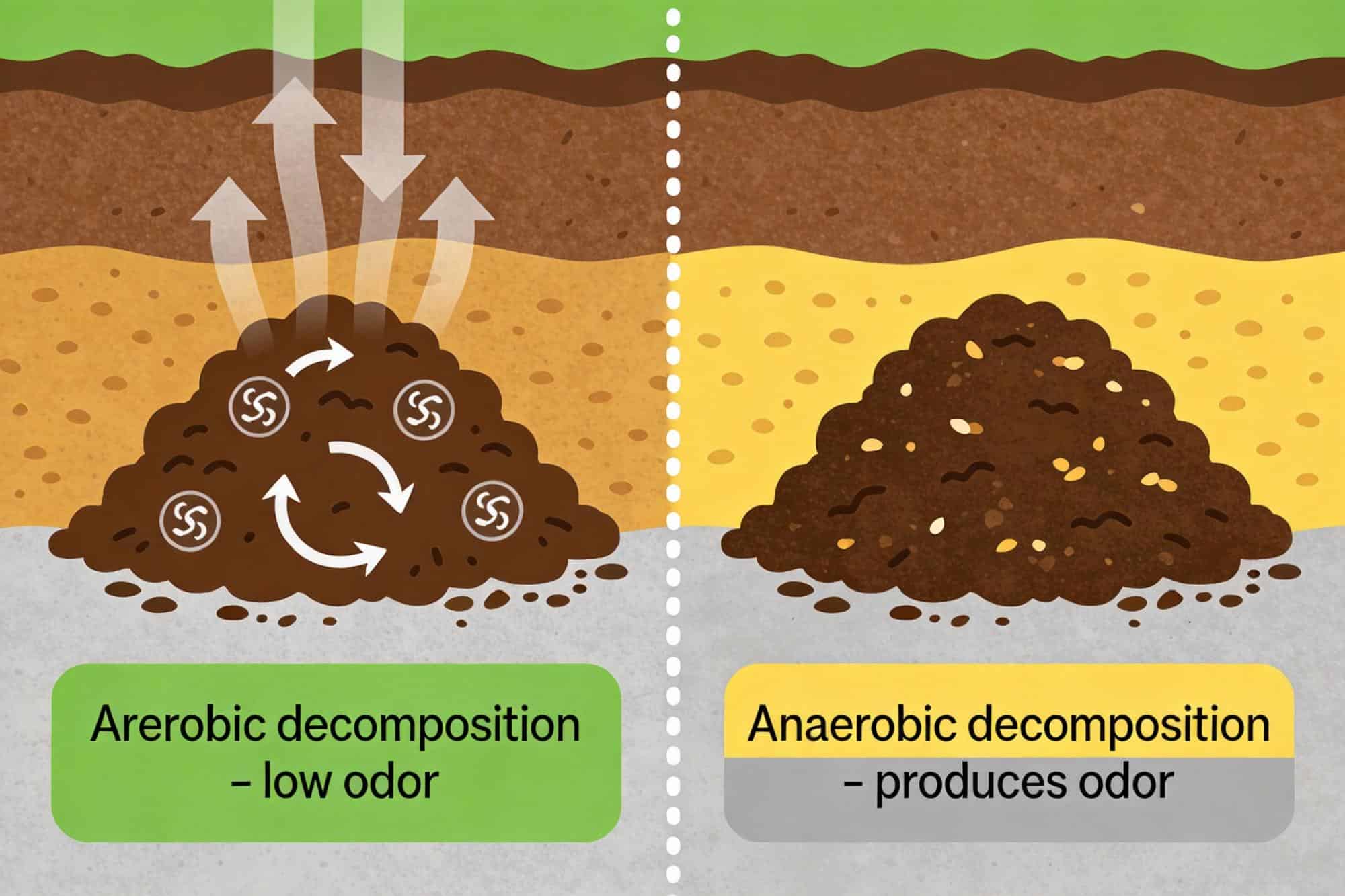
Anaerobic decomposition: the primary source of odor
When food waste breaks down in an environment with insufficient oxygen, it enters an anaerobic decomposition phase. During this process, microorganisms produce gases such as sulfur compounds and ammonia — the substances most people associate with unpleasant smells.
As long as parts of a system allow food waste to sit without adequate oxygen for extended periods, odor formation is difficult to avoid.
Waste stagnation and moisture imbalance: odor accelerators
Oxygen alone is not the only factor. Residence time and moisture control also play a critical role.
When food waste remains stationary inside a system or excess moisture cannot be managed effectively, damp conditions accelerate odor development. This is why some devices perform well initially, but begin to develop smell issues as usage increases.
Odor risk by food waste type (from highest to lowest)

In real-world use, different types of food waste carry very different odor risks. The main factors are protein content, moisture level, fat content, and how easily anaerobic conditions can form.
-
Fish, seafood, and meat (highest risk)
High protein content leads to sulfur and ammonia production; fats can also block oxygen flow. -
Leftovers, soups, and oily foods (high risk)
High moisture content often causes oxygen deprivation and sour or rotten odors. -
Eggs and dairy products (medium–high risk)
Prone to fermentation, producing acidic and ammonia-like smells, especially at elevated temperatures. -
Fruit peels and vegetable scraps (medium risk)
High fiber slows breakdown; odor risk increases when mixed with high-protein waste. -
Bread, rice, dry foods, coffee grounds (low risk)
Moderate moisture levels and slower decomposition make strong odors less likely.
Odor is usually a design problem — not a user problem
Many users share the same frustration: “I followed every step correctly, but it still smells.”
In most cases, this is not due to improper use. It’s a sign that the system’s design allows conditions like oxygen deprivation, waste stagnation, or moisture imbalance to persist over time.
If a system cannot maintain an active, oxygen-rich decomposition environment on its own, asking users to clean more frequently or limit what they add rarely solves the problem at its root.
What actually works to reduce odors (in order of importance)
1) Active mixing (the foundation)
Automatic, consistent mixing keeps food waste exposed to oxygen and prevents stagnant zones. This addresses the cause of odor formation rather than trying to mask it after the fact.
2) Airflow and ventilation design (supporting role)
Proper airflow helps remove excess moisture, but without active mixing, ventilation alone can only reduce symptoms — not eliminate the source.
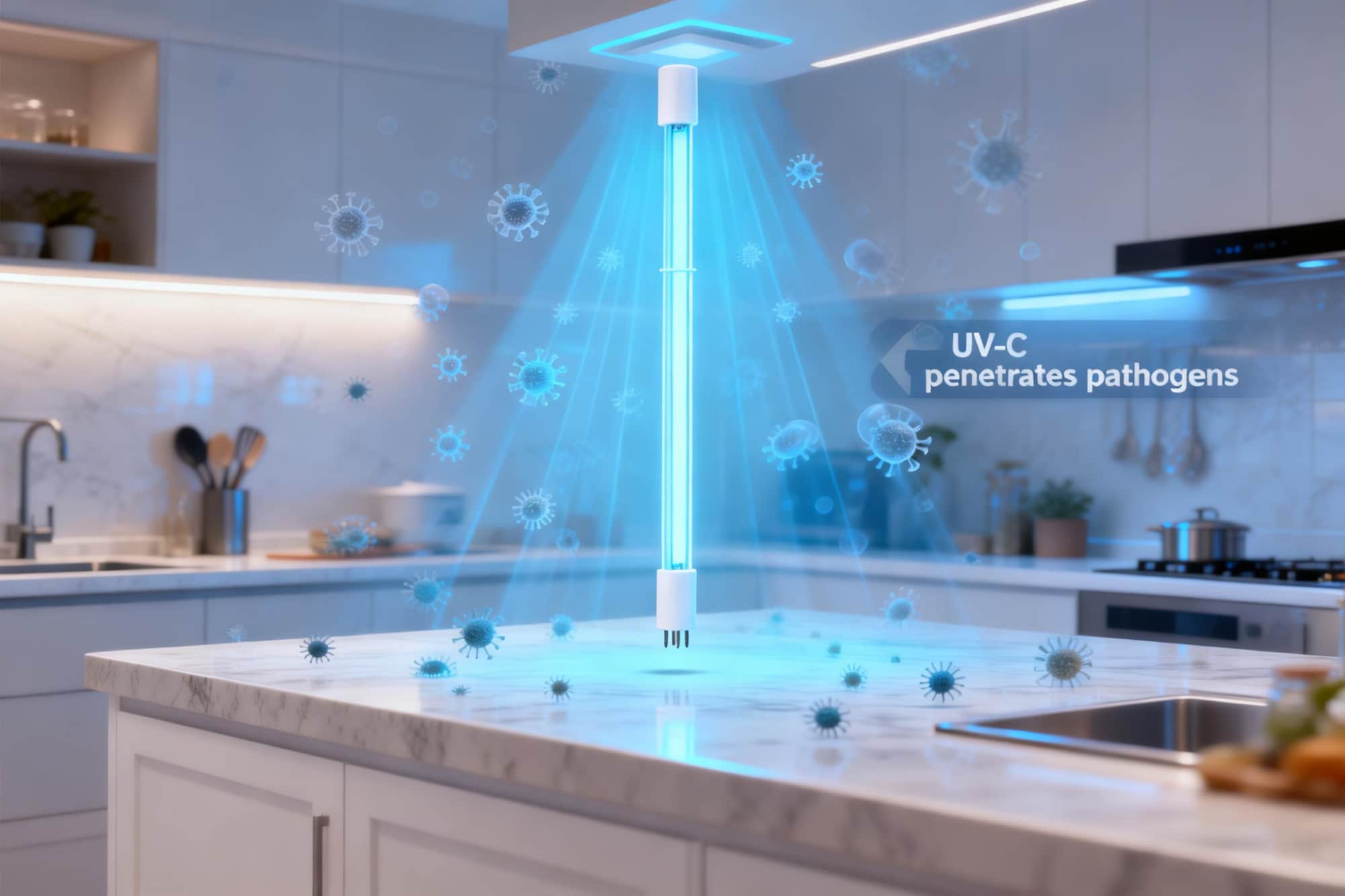
3) Antibacterial or UV features (safety net)
These technologies can help stabilize performance during heavy use or unusual conditions, but they work best as a backup rather than a primary solution.
How to choose a low-odor system: a practical checklist
- Does the system provide automatic, regular mixing?
- Does it prevent food waste from remaining stationary for long periods?
- Is there a clear approach to moisture and airflow management?
- Is the overall design focused on continuous, stable decomposition rather than frequent deodorizing?
If a product relies mainly on replaceable filters to absorb odors, without explaining how decomposition itself is managed, long-term stability may be limited.

Conclusion: “almost odor-free” starts with a stable decomposition environment
Reducing odors isn’t about overpowering smells — it’s about preventing them from forming in the first place. Systems that maintain a consistent balance of oxygen, moisture, and biological activity tend to deliver the most reliable everyday experience.
If you’d like to explore how a system designed around active mixing, moisture control, and airflow balance works in practice, you can learn more about our approach below.
FAQ
Why does my composting system sometimes develop odors?
Odors typically appear when parts of the system briefly become anaerobic, often due to waste sitting too long or insufficient moisture control.
Can composting odors be completely eliminated?
With a well-designed and stable system, odors can be significantly reduced and are often barely noticeable during normal use.
Are odors a hygiene issue or a design issue?
In most cases, odor problems reflect system design limitations rather than cleaning habits or user behavior.



Leave a comment
This site is protected by hCaptcha and the hCaptcha Privacy Policy and Terms of Service apply.