

How Much Energy Does a Food Waste Composter Really Use?
Short answer: Most household food waste composters consume far less electricity than many people expect. In real-world use, total energy consumption depends much more on system design and operating logic than on peak wattage—especially whether the unit relies on continuous heating or intelligent, on-demand operation.
As food waste composters become increasingly common in modern homes, energy use is often one of the first concerns people raise. Understanding how these systems consume electricity matters not only for monthly utility bills, but also for long-term operating cost, household heat output, carbon footprint, and overall sustainability.
How Much Energy Does a Food Waste Composter Use in Real-World Conditions?

When comparing food waste composters, many buyers focus on a single specification: maximum wattage. While this number is easy to compare, it rarely reflects actual electricity consumption over time.
A system with a higher rated power that runs intermittently may consume less total energy than a lower-wattage unit that operates continuously. For this reason, cumulative energy use over time is a far more meaningful metric than peak power alone.
This distinction is especially important for appliances designed to run daily or semi-continuously in enclosed kitchen environments.
Common Misconceptions About Electric Composter Energy Use
One of the most common misconceptions is that higher wattage automatically means higher electricity bills. In practice, energy consumption is determined by both power and duration.
Appliances that rely on constant heating or continuous operation tend to accumulate significant energy usage—even if their wattage appears modest on paper. Evaluating efficiency requires looking beyond headline specifications to understand how and when energy is actually used.
Continuous Heating and Grinding vs. Intelligent Mixing Systems
From an energy perspective, most electric food waste systems fall into two broad categories.
Continuous Heating and Dehydration Systems
These systems rely on sustained high temperatures to dry food waste before mechanically grinding it into fine particles. The process is fast and predictable, but it depends heavily on heating elements running for extended periods.
Intelligent Microbial Composting Systems
Intelligent composting systems operate differently. Heating is activated only when needed to maintain microbial activity, while mechanical mixing ensures oxygen availability and even distribution of moisture and heat.
In simple terms:
- Continuous heating systems use electricity to directly process food waste.
- Intelligent composting systems use electricity mainly to support biological processes, allowing microbes to perform most of the decomposition work.

According to guidance from the U.S. Department of Energy, appliances that depend on prolonged or continuous heating often account for a disproportionate share of household energy use—even when their rated power appears low.
From a household energy standpoint, especially in apartments or closed kitchens, efficiency over time tends to matter more than maximum processing speed.
Factors That Influence Energy Consumption
System Size and Capacity
Larger systems generally require more energy to operate, but energy efficiency should be evaluated per kilogram of food waste processed. A well-optimized larger system can be more efficient than a smaller unit with poor thermal or mechanical design.
Frequency of Use
Higher usage naturally increases energy consumption. However, intelligent systems adjust operating cycles based on actual load, avoiding unnecessary energy use during low-volume conditions.
Technology and System Design
If energy efficiency is a priority, the most important indicators are structural—not marketing-driven:
- Intermittent motor operation rather than constant heating
- Active mixing instead of passive drying
- Adaptive temperature control and operating algorithms
- True composting processes rather than dehydration alone
How Intelligent Composting Systems Reduce Energy Use

Intelligent composting systems shift most of the workload from electricity to biology. Instead of using heat to force rapid dehydration, energy is used sparingly to create conditions where microbes can thrive and work efficiently.
Intelligent Mixing Cycles
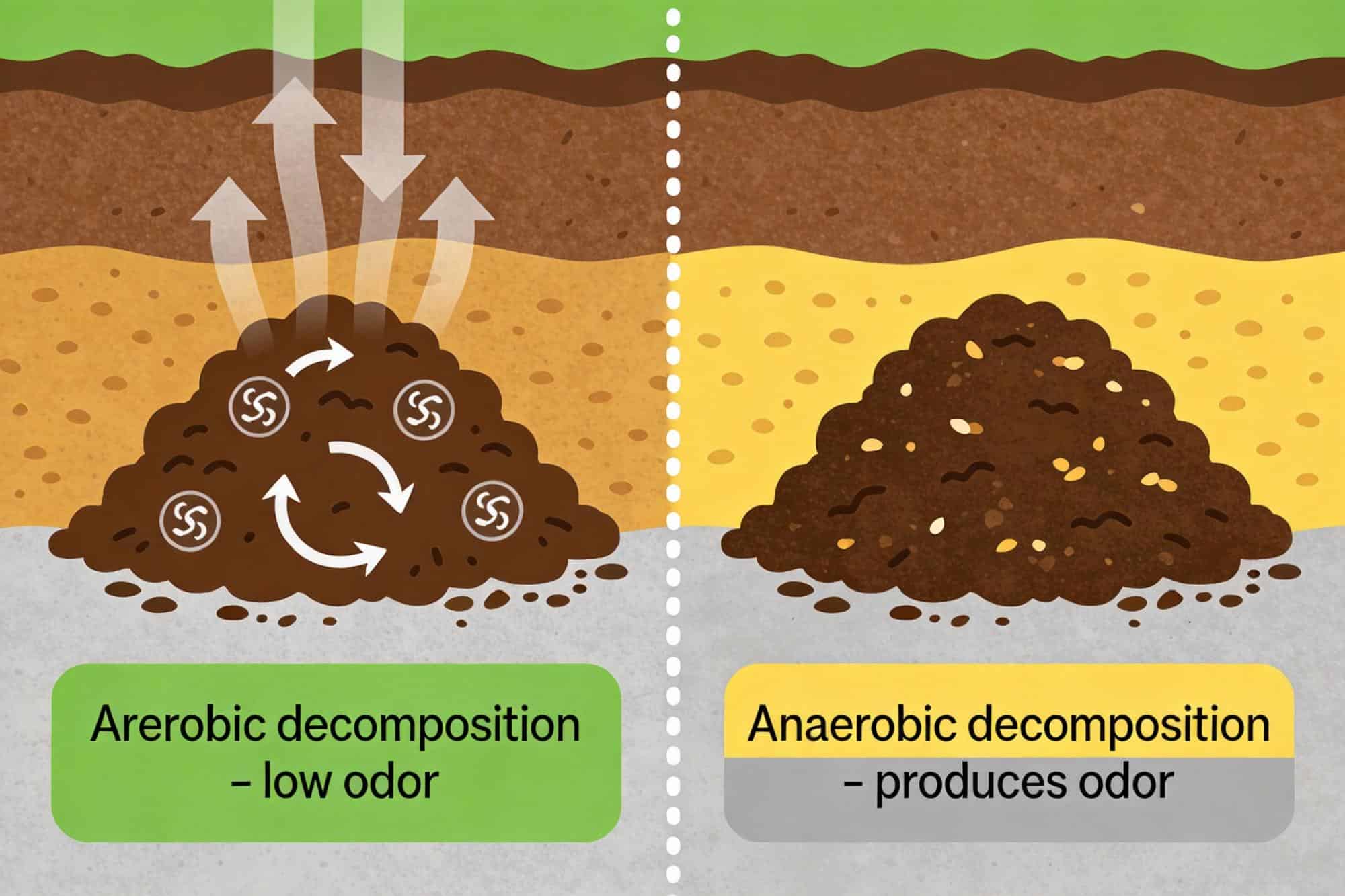
Carefully timed mixing ensures aerobic conditions, allowing microbial activity to generate heat naturally. Controlled mechanical motion and temperature support work together to accelerate decomposition while minimizing wasted energy.
High-Efficiency Motors and Power Optimization
Energy-efficient motors combined with adaptive control algorithms allow the system to dynamically adjust power output. Whether mixing, heating, or idling, electricity is consumed only when necessary.
How to Compare Energy Efficiency Across Food Waste Composters
When comparing systems over the long term, the following factors are often more revealing than advertised wattage:
- Average power consumption over time
- Whether heating is continuous or on-demand
- The role of microbial composting versus direct dehydration
These criteria provide a clearer picture of real household energy impact.

FAQ
Does a food waste composter significantly increase household electricity use?
In most households, a well-designed food waste composter does not significantly increase electricity consumption. Many efficient systems consume less energy than common kitchen appliances such as dishwashers or microwave ovens.
Can energy-efficient systems handle the same amount of food waste?
Yes. Advanced systems combine intelligent mixing with adaptive heating to maintain stable, high-performance processing while reducing overall energy use.
How should I compare energy use between different systems?
Rather than focusing solely on wattage, it is more effective to compare system design, operating logic, and long-term efficiency. These factors offer a more accurate view of real-world energy consumption.
Final takeaway: For households seeking both performance and sustainability, the most energy-efficient food waste composters are those designed around stable biological processes, not continuous heating. Systems that prioritize intelligent mixing, adaptive temperature control, and microbial activity tend to deliver lower energy use alongside consistent, reliable results.
If you want to explore how modern system design addresses energy efficiency at its core, you can learn more about our approach to intelligent composting systems designed for everyday kitchens.


Leave a comment
This site is protected by hCaptcha and the hCaptcha Privacy Policy and Terms of Service apply.