
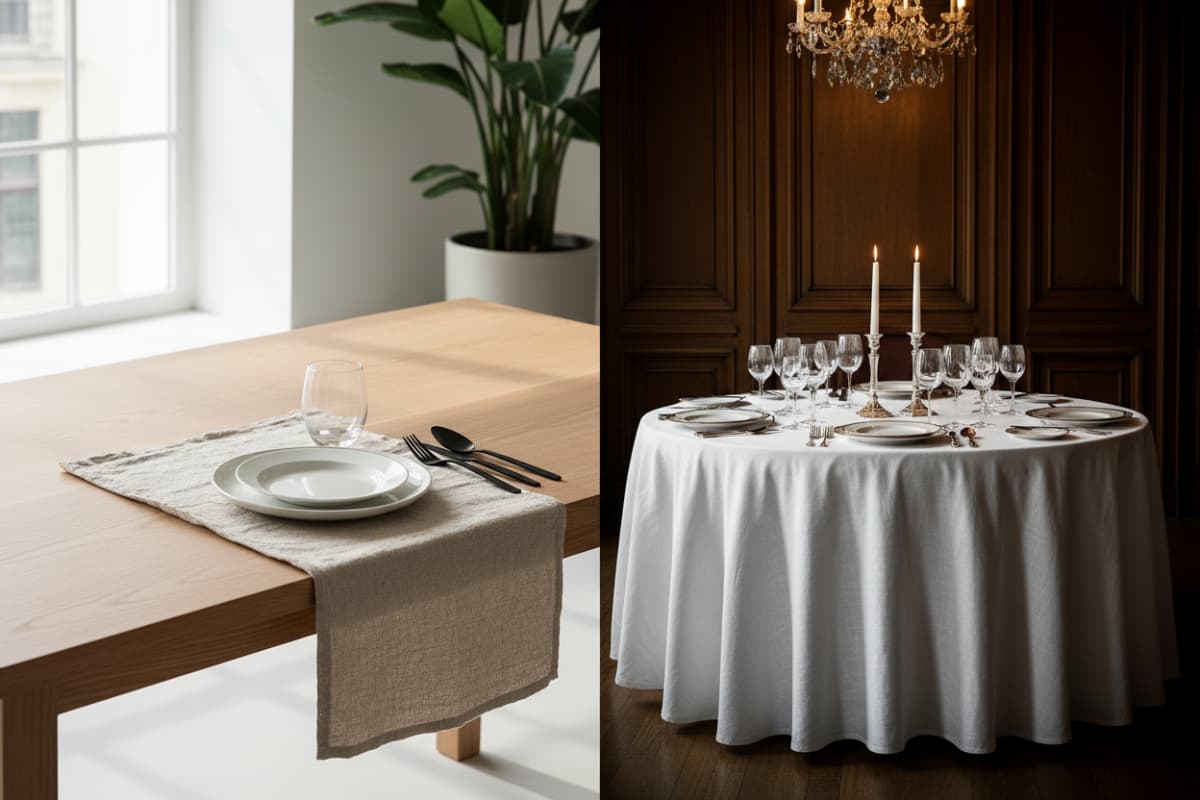
Linen Placemats vs. Tablecloths for Restaurants: A Complete Purchasing Guide
Introduction: A Decision Impacting Table Turnover and Brand Image
In the operation of high-end dining and boutique hotels, table settings are not just an extension of brand visual identity; they are a core element directly impacting daily operational efficiency and profit margins. For restaurant table linen procurement managers, choosing between "Linen Placemats" and "Linen Tablecloths" is never merely an aesthetic question. It directly affects table turnover efficiency, laundry costs, inventory management, and the customers' first impression of the restaurant's market positioning. Before diving into this comparison, you may also want to review What Kind of Cloth Napkins Do Restaurants Use? to complete your full table linen procurement picture.
This article provides an in-depth analysis of how to choose the most suitable linen for your restaurant from three key dimensions: turnover efficiency, long-term maintenance costs, and purchasing specifications.
Core Differences Comparison
| Dimension | Linen Placemats | Linen Tablecloths |
|---|---|---|
| Coverage Area | Covers individual dining settings only | Covers the entire tabletop |
| Replacement Time | 30–60 seconds / table | 2–4 minutes / table |
| Procurement Cost (Per Item) | Lower | Higher |
| Washing Frequency | Replaced after every meal service | Replaced after every meal or daily |
| Inventory Need (Par Level) | Moderate (Seat count × 3 par) | Higher (Table count × 4–5 par) |
| Brand Perception | Relaxed, modern, casual luxury | Formal, high-end, strong sense of ceremony |
Table Turnover Efficiency: The Hidden Advantage of Placemats
In restaurants with high table turnover rates (e.g., 2–3 turns during lunch service), replacing placemats is 4 to 8 times faster than replacing tablecloths. Servers simply remove the used placemats and lay down clean ones without needing to realign a large fabric over the entire table.
- Linen Tablecloths: Replacing a tablecloth typically requires two servers working together to ensure it is laid flat with an even drop. The process is time-consuming (taking 2–4 minutes based on Budloop's testing) and risks scattering food crumbs when clearing the table, which can disrupt neighboring guests' dining experience.
- Linen Placemats: Replacement is extremely swift. A single staff member can complete the clearing and resetting in a very short time (30–60 seconds based on Budloop's testing). For modern Smart Casual or All-Day Dining restaurants pursuing high turnover rates, placemats can significantly reduce customer waiting times.
Take a 20-table restaurant as an example:
- Using Tablecloths: Each full turnover cycle requires an average of 40–60 extra minutes of total labor time.
- Using Placemats: Table reset time is reduced by approximately 75%.
For Casual Dining and Café formats, this efficiency gap directly impacts daily revenue.
Cost Structure Analysis
Taking Budloop's linen collection as an example:
Procurement Costs (100% Washed Linen, Wholesale Reference Price):
- Linen Placemats (12×18 in): Approx. $2–$4 per piece wholesale
- Linen Tablecloths (60×84 in, fits a 6-seater): Approx. $22–$45 per piece wholesale
Considering that tablecloths require a higher safety buffer (4–5 Par), the initial linen procurement budget for a medium-sized restaurant opting for tablecloths is often more than 10 times that of choosing placemats.
Laundering & Wear
| Evaluation Metric | Linen Tablecloths | Linen Placemats |
|---|---|---|
| Cost per Wash | High (Bulky, occupies significant machine space) | Extremely Low (Compact, allows massive batch washing) |
| Localized Stain Risk | A single red wine spill requires replacing and washing the entire tablecloth | Only the single soiled placemat needs replacing; the rest remain untouched |
| Ironing & Folding | Requires large industrial flatwork ironers; folding consumes labor | Easy to iron flat; takes up minimal storage space when stacked |
| Lifespan | Edges are prone to friction wear; higher probability of widespread stubborn stains | Relatively low damage rate; low replacement cost for individual items |
Inventory Management

SKU Complexity & Size Adaptability
- Linen Tablecloths (High SKU Burden): Restaurants usually have multiple table sizes (2-seater squares, 4-seater rounds, 8-seater rectangles). To ensure an elegant and uniform drop, you must purchase specific tablecloth sizes for each table type. This causes your linen SKU count to surge, complicates management, and easily leads to inventory imbalances (shortage of one size, overstock of another).
- Linen Placemats (Ultimate Standardization): Placemats utilize standardized dimensions (e.g., 12×18 in). Regardless of how table sizes and shapes vary, placemats adapt perfectly. This "one-size-fits-all" attribute minimizes linen SKUs, significantly reducing the complexity and trial-and-error costs of procurement planning.
Storage & Handling Space
- Linen Tablecloths: Heavy-weight, large-area tablecloths remain bulky even when folded. They require spacious, dry, and dust-proof dedicated linen shelving. Furthermore, tablecloths often develop hard creases when stacked in storage, frequently requiring re-ironing before use, which adds to secondary processing costs.
- Linen Placemats: Extremely space-saving. The volume of hundreds of stacked flat placemats might only equal a dozen folded tablecloths. They can be easily stored in the drawers or small cabinets of a waitress station, keeping the main back-of-house storage free and allowing front-of-house staff to restock seamlessly.
Buffer Stock & Replacement Cost
To handle unexpected spills and stains, restaurants must maintain a certain percentage of "Buffer Stock".
- Linen Tablecloths: If a tablecloth is irreversibly ruined by red wine, you lose a large, expensive piece of fabric. Because of the high unit price, maintaining a 30%–50% buffer stock for tablecloths ties up a significant amount of capital.
- Linen Placemats: Even when using premium 200–220 GSM heavyweight linen placemats, the replacement cost per item is far lower than a tablecloth. If irreversible staining occurs, you simply discard a single placemat. The lower unit price allows restaurants to comfortably maintain high buffer stock levels, completely eliminating the dilemma of "running out of clean linens during peak hours."
Operational Flexibility (Dynamic Table Combining)
Restaurants frequently need to push two 2-seater tables together to accommodate a party of four based on guest traffic. In this scenario, the original 2-seater tablecloths no longer fit, and staff must rush to the storage room to find a larger tablecloth. When using placemats, you simply push the tables together and lay down two additional placemats, achieving true "zero-friction" coordination between the storage room and the dining floor.
Restaurant Ambience & Brand Positioning
In dining space design, the tabletop is where the customer's gaze lingers the longest. The texture of the fabric beneath their fingertips often subconsciously dictates their first impression of the restaurant's average check size and brand positioning. Therefore, the choice between tablecloths and placemats is essentially an outward expression of the restaurant's business philosophy.
Traditional Luxury & Sense of Ceremony: Linen Tablecloths
- Ideal Scenarios: Fine Dining, traditional Michelin-starred restaurants, high-end banquet halls.
- Visual & Psychological Cues: Pure white linen tablecloths are the classic symbol of French haute cuisine. The full-coverage design instantly unifies the visual tone of the space and provides excellent acoustic dampening (softening the clatter of cutlery), creating an intimate, focused, and highly ceremonial dining environment.
- Brand Messaging: It communicates a brand value of "classic, rigorous, and an uncompromising pursuit of perfection."
Modern Accessible Luxury & Local Culture: Linen Placemats
- Ideal Scenarios: Modern French/Italian, Farm-to-Table concepts, boutique hotel All-Day Dining, upscale glamping themes, or nature-driven chef-owned restaurants.
- Visual & Psychological Cues: Modern restaurants increasingly prefer to showcase expensive solid wood grains or natural marble tabletops. Placemats strike the perfect balance between "protecting the table" and "exposing the material." Particularly, pure linen—free from excessive chemical processing and waterproof coatings—allows customers to directly feel the rustic yet soft texture of natural fibers, highly resonating with the modern desire for a "relaxed, effortless vibe."
- Brand Messaging: It projects a modern luxury concept of being "organic, confident, and returning to the essence," aligning perfectly with high-end brands focused on sustainability and natural ecology.
The Mix-and-Match Solution: Layering Tablecloths + Placemats

If you refuse to sacrifice the luxurious sense of ceremony brought by traditional tablecloths, yet want to solve the dilemma of high laundry and wear costs, Layering (combining tablecloths and placemats) is currently the most favored advanced solution among top-tier hotels and restaurants. See our Coordinated Linen Collections for Restaurants for ready-made layering combinations.
1. Building a "Cost Defense Mechanism"
This is the greatest hidden advantage of the layering strategy. A wide tablecloth sets an elegant foundation, but it is highly vulnerable to being completely replaced due to a single drop of wine or a smear of sauce.
- Physical Barrier: Placing a placemat over the tablecloth establishes a primary line of defense for the expensive underlying fabric. During a meal, 90% of food debris and drips will land on the smaller area of the placemat.
- Precision Replacement: During table turnover, servers only need to clear and wash the top-layer placemat. The underlying tablecloth can continue to be used if there are no visible stains. This drastically reduces the washing frequency of large tablecloths, saving commercial laundry fees and significantly extending the lifespan of your core linens.
2. Visual Depth & Focus
Layering breaks the monotony of a solid, large tablecloth, adding architectural depth to the tabletop.
- Clash of Colors and Textures: Restaurants can utilize the color contrast between the base cloth and the placemat (e.g., an oatmeal tablecloth paired with deep coffee-brown placemats) to reinforce brand visuals.
- Creating an "Exclusive Dining Zone": Layering creates a visual framing effect, perfectly focusing the customer's attention on the exquisite bone china and the culinary presentation in the center, subtly elevating the perceived value of the dishes.
3. The Pure Texture of Zero Compromises
For the sake of "protecting the underlying tablecloth," some low-end suppliers might recommend adding a waterproof coating to the underside of the placemat. In high-end dining, this practice should be firmly avoided. A coating not only completely masks the natural breathing and texture of the linen but also causes the edges to become stiff and harsh, severely impacting both its lifespan and the premium ethos of your brand. Allowing pure, 100% European washed linen to present itself naturally is the true path to luxury.
Budloop Recommended Configurations
We provide the following linen tabletop setup recommendations tailored to different hospitality formats:
- Fine Dining / High-End Restaurants: Recommendation: Tablecloth dominant, layered with placemats. White or beige linen tablecloths set a formal tone, paired with matching or contrasting placemats for added depth. This combination offers the highest visual ceremony and is the mainstream choice for Michelin-level establishments.
- Casual Dining: Recommendation: Placemats dominant. Showcase the natural grain of wooden tables while elevating the texture with linen placemats, maintaining a relaxed atmosphere. This setup ensures high turnover efficiency and low washing costs.
- Café: Recommendation: Placemats or linen tea towels as decorative underlays. Small-sized placemats or folded tea towels offer practical protection while reinforcing brand visual style. They are highly flexible and inexpensive to rotate seasonally.
- Boutique Hotel Dining / Breakfast Service: Recommendation: Layered Tablecloth + Placemats. Breakfast scenarios have frequent turnovers. We recommend laying a fixed tablecloth (changed daily) with placemats replaced after every guest, perfectly balancing efficiency and a premium feel.
Conclusion
There is no absolute superiority between placemats and tablecloths; the key lies in your restaurant's market positioning, turnover goals, and budget structure. Once you've made your choice, proper care is essential to maximize lifespan—see our complete guide: How to Wash Restaurant Linens: The Ultimate Cleaning Guide. If you need an optimized solution tailored to your specific scenario, or wish to request a free linen sample, please feel free to contact Budloop's Director of Business Development, Eli Cheng, for an exclusive custom quote.

FAQ: Common Questions on Restaurant Linen Procurement
What fabric weight (GSM) should commercial restaurants choose for linen?
For high-frequency commercial dining environments, we strongly recommend a heavy weight of 200–220 GSM. Fabrics below this weight (such as the standard 150 GSM found in home goods) easily thin out and warp after repeated industrial laundering. The 200–220 GSM range perfectly balances elegant drape and durability, and is robust enough to cleanly hold custom machine embroidery.
Should I purchase linen placemats with a waterproof coating to prevent stains?
We strongly advise against it. In upscale dining, utilizing the pure, natural essence of 100% European washed linen is vital to conveying brand quality. Waterproof coatings entirely mask the linen's unique breathability and natural texture. Furthermore, edges often stiffen after commercial washing, which actually reduces the lifespan of the item and severely degrades the tactile experience for the guest.
How much inventory (Par Level) should a restaurant prepare for an initial order?
Depending on the type of linen, different inventory standards apply:
- Linen Placemats: Due to extremely rapid turnover, we typically recommend a par level of 3 Par based on seat count (1 in use, 1 in the wash, 1 in storage).
- Linen Tablecloths: Because of higher wash/care costs, larger surface areas, and high susceptibility to localized stains, we recommend a buffer of 4–5 Par based on table count.
For a full step-by-step par level calculation with worked examples, see: How Many Cloth Napkins Does a Restaurant Need? A Complete Linen Inventory Guide.
Can linen be customized for brand display?
Absolutely. The 200–220 GSM heavyweight linen provided by Budloop is exceptionally well-suited for precise Machine Embroidery. Adding a custom restaurant logo to the corner of a placemat or the drop edge of a tablecloth is currently the most sophisticated and restrained way for top-tier restaurants to elevate brand recognition.

Leave a comment
This site is protected by hCaptcha and the hCaptcha Privacy Policy and Terms of Service apply.