
Article: How Many Cloth Napkins Does a Restaurant Need? A Complete Linen Inventory Guide
How Many Cloth Napkins Does a Restaurant Need? A Complete Linen Inventory Guide
Why the "3 Per Guest" Formula Fails for Restaurants
If you search for linen calculation formulas online, the most common answer comes from the event planning industry: prepare 3 disposable napkins per guest, plus a 10-15% buffer.
For a one-off wedding or a fast-food joint, this formula works perfectly. But for a restaurant running two services a day, six days a week, and relying on commercial laundry—this formula will leave you completely out of stock by Tuesday.
Your ideal linen inventory is not a one-size-fits-all fixed number. It requires a scientific estimation based on four specific factors: seating capacity, daily table turns, laundry turnaround time, and safety stock.
This guide explains how to calculate your own restaurant napkin inventory and how to determine a sensible opening order that balances flawless service with smart cash flow.
The Core Formula: Calculating Your "Par Level"

Par Level refers to the minimum number of napkins required to keep normal operations running smoothly while clean napkins are moving through your laundry cycle.
A practical way to estimate your restaurant's napkin inventory is:
Par Level = Daily Usage × (1 + Laundry Turnaround Days) × Safety Factor
Variable Breakdown:
- Daily Usage: Seating Capacity × Daily Total Table Turns
- Laundry Turnaround Days: The days it takes from sending dirty napkins out to getting clean ones back (in-house is usually 1–2 days; outsourced commercial laundry is typically 2–3 days).
- Safety Factor: The buffer for stain attrition, damaged items, and unexpected peak demand.
Quick Reference: Table Turns and Safety Factors by Model
| Restaurant Type (Operational Model) | Est. Daily Total Table Turns | Recommended Safety Factor | Safety Logic & Quality Control Standards |
|---|---|---|---|
|
Fine Dining (Dinner only, slow pace) |
1.0–1.5 turns | 1.4–1.5× | Strict visual standards. Any slight stain, fading, or frayed edges must be discarded. High safety factor for QC loss. |
|
Upscale Casual (Lunch + Dinner) |
2.5–3.5 turns | 1.3–1.4× | Balance of high turnover and QC. Buffer for daily stubborn stains (wine, coffee) and weekend traffic surges. |
|
High-Turnover Bistro (All-day, high traffic) |
3.5–5.0 turns | 1.2–1.3× | Rapid turnover. Fast table turns lead to high-frequency washing; requires a buffer for potential laundry delivery delays. |
|
Hotel Breakfast (Morning only, intense) |
2.0–3.0 turns | 1.2–1.3× | Concentrated consumption. Demand spikes within a short 3–4 hour window; zero margin for error mid-service. |
Step-by-Step Calculation Examples
Example 1: 50-Seat Upscale Casual Restaurant (Lunch & Dinner)
- Daily Usage: 50 seats × 3.0 turns = 150 napkins/day
- Base Requirement: 150 × (1 + 2 days for commercial laundry) = 450 napkins
- Par Level: 450 × 1.35 safety factor = 607.5 napkins
- Recommended Starting Order: 610–650 napkins (Rounding upward gives the operation additional protection during busy weekends.)
Example 2: 30-Seat Fine Dining Restaurant (Dinner Only)
- Daily Usage: 30 seats × 1.5 turns = 45 napkins/day
- Base Requirement: 45 × (1 + 1 day for in-house/dedicated laundry) = 90 napkins
- Par Level: 90 × 1.50 max safety factor = 135 napkins
- Recommended Starting Order: 135–150 napkins (Fine dining requires a larger reserve because napkins with even minor visual flaws will be removed from active service.)
Example 3: 80-Seat Boutique Hotel Breakfast
- Daily Usage: 80 seats × 2.5 turns = 200 napkins/day
- Base Requirement: 200 × (1 + 2 days outsourced laundry) = 600 napkins
- Par Level: 600 × 1.30 safety factor = 780 napkins
- Recommended Starting Order: 780–800 napkins
The Hidden Costs of Underestimating Inventory
The biggest inventory mistake operators make is planning for a normal day instead of an unusually difficult one. Imagine the following scenarios happening simultaneously on a busy Friday night:
- Several napkins become heavily stained by red wine during service.
- A commercial laundry delivery is delayed by a day.
- A private dining room adds extra seats, exceeding expectations by 20%.
- A batch of napkins fails front-of-house quality inspection.
The result is not simply "a few missing napkins." It leads to emergency replacement purchases, expedited shipping costs, inconsistent colors between different batches, and massive pressure on your service staff.
Golden Rule: Always round your inventory calculation upward; never round down.
When to Reorder: The "3 Inventory Buckets" System

Do not wait until your active inventory is nearly exhausted to place an order. A practical system to determine your reorder point is to monitor three "buckets":
- Active Inventory: Napkins currently available for service.
- Laundry Inventory: Napkins currently being washed or waiting for return.
- Safety Inventory: Napkins reserved strictly for unexpected demand, stains, and delays.
When your combined usable inventory drops to a level where you start dipping into your Safety Inventory, it is time to reorder. Establishing this trigger point early is especially critical for overseas wholesale orders where production and transportation require lead time.
Beyond Quantity: Choosing the Right Restaurant Linen

Once you know how many napkins you need, the next decision is choosing the right product. For a full breakdown of materials, sizes, and GSM recommendations, see our complete guide: What Kind of Cloth Napkins Do Restaurants Use?
1. How Napkin Size Affects Inventory
Larger napkins require more fabric, occupy more storage space, and reduce laundry machine capacity.
| Napkin Size | Typical Use | Consideration |
|---|---|---|
| 17 × 17 in (43×43 cm) | Casual restaurants & cafés | Compact and practical; highest washing efficiency. |
| 18 × 18 in (46×46 cm) | Casual to Upscale Casual | The versatile golden standard. Best balance of drape and operations. |
| 20 × 20 in (51×51 cm) | Fine dining & premium settings | Excellent lap coverage and complex foldability; slightly higher wash cost. |
2. Fabric Weight (GSM) and Finish
A lighter linen offers a softer, more relaxed hand feel, while a heavier linen (e.g., 200–220 GSM) provides more body, structure, and long-term durability against commercial washing. Pre-washed or stonewashed finishes can provide that instantly elegant, relaxed appearance right out of the box.
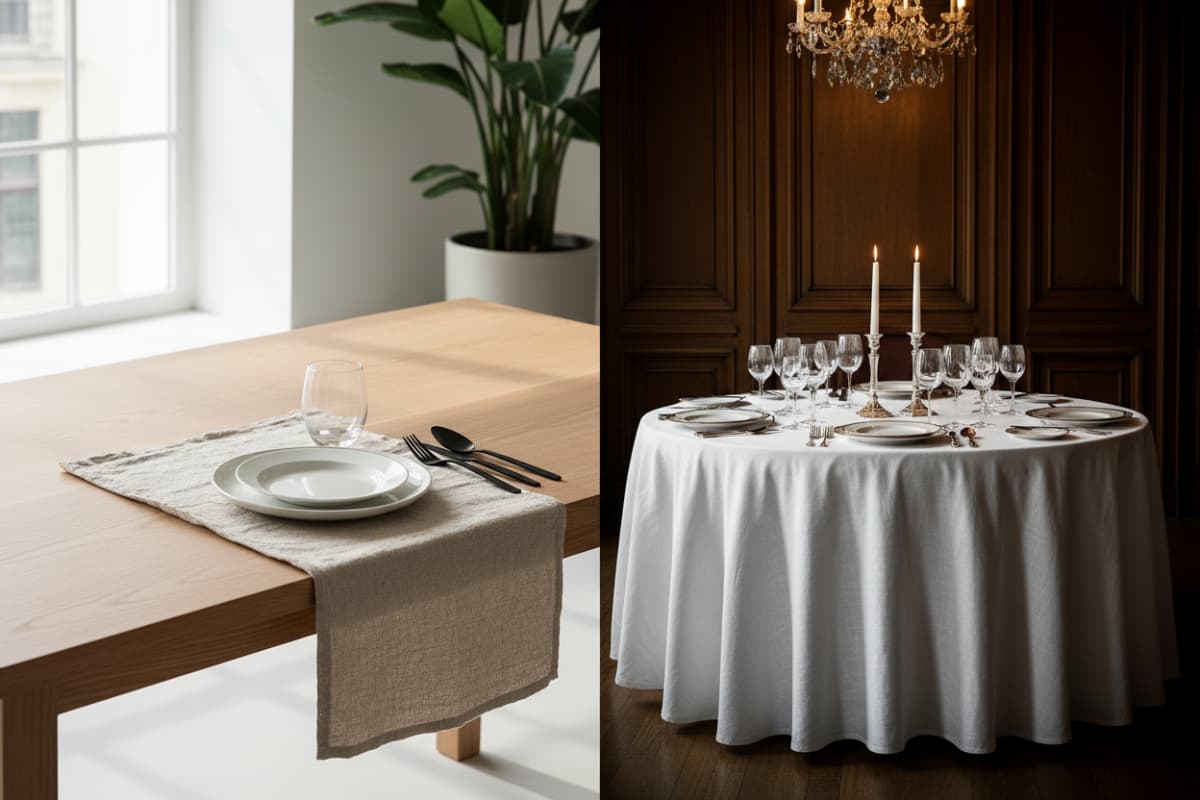
Rather than selecting a fabric based only on photographs, consider your table setting style, desired drape, and restaurant brand positioning. Also consider whether placemats or tablecloths better suit your concept: Linen Placemats vs. Tablecloths for Restaurants: A Complete Purchasing Guide.
3. Customization & Branding
Depending on your concept, consider whether your inventory needs embroidery, branded finishing (like contrast hemstitching), or custom sizing to elevate the guest experience.
Budloop Linen Solutions for Hospitality
Budloop supplies premium European washed linen napkins for restaurants, boutique hotels, wedding brands, and creative lifestyle businesses. Our restaurant-focused collection—featuring 100% European linen and OEKO-TEX certification—is explicitly designed to withstand high-frequency commercial laundering. For care and maintenance tips to maximize your linen lifespan, see: How to Wash Restaurant Linens: The Ultimate Cleaning Guide.
If you are unsure which fabric weight, size, or color is appropriate for your restaurant, starting with a physical sample can help you make the right purchasing decision.

Request a Complimentary Sample Pack before placing your bulk order to evaluate the texture, weight, and structure of Budloop linens in your actual dining setting.
Frequently Asked Questions
Are linen napkins reusable and cost-effective?
Yes. Linen napkins are designed to be washed and reused for hundreds of cycles. While the initial investment is higher, their long-term commercial ROI (amortized cost per use) is excellent. They also elevate the dining experience and support your restaurant's sustainability goals.
Do restaurants reuse cloth napkins?
Absolutely. Reusable cloth napkins are standard practice in mid-to-high-end restaurants worldwide. A 200–220 GSM linen napkin withstands 200+ commercial wash cycles, making the per-use cost far lower than disposable alternatives while significantly elevating the guest experience.
What napkins do restaurants use?
Fine dining restaurants use 100% linen napkins (20×20 in or larger). Casual dining typically uses 18×18 in washed linen. High-volume cafés often use smaller 17×17 in napkins for washing efficiency. Cotton and poly-cotton blends are used in budget or high-grease environments.
How often do restaurants wash linen napkins?
This depends on the restaurant's laundry system. In-house operations may process linen daily (1-day turnaround), while scheduled commercial laundry services typically take 2 to 3 days. Your actual laundry turnaround dictates your Par Level requirements. For a full commercial washing guide, see: How to Wash Restaurant Linens.
What is the minimum order quantity (MOQ) for Budloop linen napkins?
Budloop's standard MOQ for linen napkins is currently 50 pieces. Because MOQ can vary for highly customized projects (like specific embroidery or custom sizing), we recommend requesting a sample to confirm the exact details for your wholesale order.

Leave a comment
This site is protected by hCaptcha and the hCaptcha Privacy Policy and Terms of Service apply.