
Article: What Side Does the Napkin Go On? A Guide to Napkin Placement and Table Aesthetics
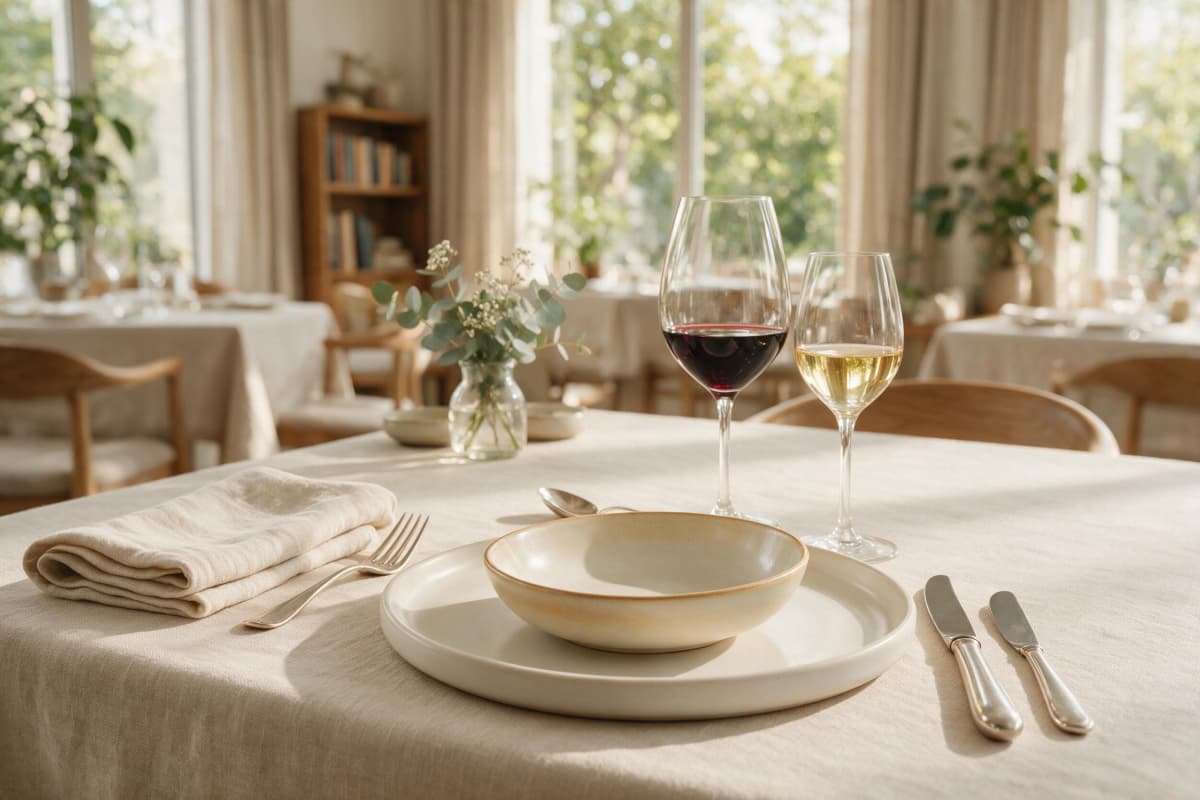
What Side Does the Napkin Go On? A Guide to Napkin Placement and Table Aesthetics
Whether setting the table for a meticulously planned dinner party or aiming to handle every dining detail with grace at a fine-dining restaurant, hosts and guests alike often face a highly debated practical question: what side of the plate does the napkin go on? Should it be placed on the left, or dead center? And when stepping away from the table mid-meal, how should the napkin be properly placed? For a complete guide to choosing the right napkins for your restaurant, see: What Kind of Cloth Napkins Do Restaurants Use?
For a Quick Answer: Does the Napkin Go on the Left or Right?
If you are in a rush and just need to know whether to put the napkin on left or right, remember these golden rules:
Placement: Standard classic etiquette dictates the left. Modern high-end banquets favor the center. If you find yourself in an authentic traditional French restaurant, the napkin will appear on the right. All three placements are absolutely correct, depending on table space and restaurant culture.
Stepping Away Mid-Meal: Casually fold it in half (hiding the soiled side) and place it on the table to the left of your plate. Absolutely never hang it over the back of the chair or leave it on the seat.
This article will step beyond superficial, rigid rules to deeply analyze the underlying logic of premium table settings. Whether you are a table stylist pursuing visual perfection or a dinner guest who cares about proper etiquette, if you have ever wondered which side does the napkin go on, you will find the standard answer right here.
Table Space Management and Culture: Comparing the Three Mainstream Placements

When establishing table-setting standards, the choice of napkin placement depends on the menu structure, physical table space, and brand culture. Here is a straightforward breakdown of the core differences among the three placements:
| Placement | Suitable Commercial & Banquet Scenarios | Core Advantages & Visual Considerations | Space Consumption Assessment |
| Left | A La Carte restaurants, business banquets, family dinners | Most ergonomic flow; builds the classical axis-symmetrical beauty of Western table settings. | High (Mind the spatial conflict with the bread and butter plate) |
| Center | Tasting Menu, premium wedding long tables | Instantly relieves spatial pressure; leaves breathing room for multiple wine glasses. | Low (Maximizes lateral space savings) |
| Right | Authentic French restaurants, vintage-themed banquets | Pays homage to French aristocratic silverware culture; provides a brand story for FOH service. | Medium (Requires balancing the flow with knives and glass sets) |
The Traditional Left-Side Standard
Suitable Scenarios:
A La Carte restaurants, traditional business banquets with ample table space, or family dinners.
Core Advantages:
Because the right hand is often kept free for toasting, shaking hands, or holding a menu, using the left hand to naturally pick up the left-side napkin and smoothly drape it over the lap creates the most ergonomic and elegant motion.
It perfectly balances the visual weight of the knives and glasses on the right side of the plate, establishing the classical axis-symmetrical beauty of Western table settings.
Specific Placement Guidelines:
Vertical Alignment: The bottom edge of the napkin, the bottom of the forks, and the bottom of the main plate must align on the same horizontal line, exactly 1 inch (2.54 cm) from the edge of the table.
Folded Dimensions: The standard napkin size for a formal dinner is 20×20 inches. When placed on the left, it should typically be folded into a rectangle (usually a tri-fold or quarter-fold, ultimately presenting as a 5×10 inch rectangle). Browse our pure linen dinner napkins to find the right size for your table setting.
Core Detail—Orientation of Open Edges: The loose, open edges of the folded napkin must face to the right (towards the forks) or down (towards the table edge). This way, when a guest sits down and grasps it, a gentle pull with the right hand will allow the napkin to unfold smoothly across their lap, without flapping open in mid-air or snagging on the forks.
Budloop's Practical Advice:
This method consumes a significant amount of left-side space. If the menu requires a Bread & Butter Plate and a butter knife, the left side can instantly become crowded, increasing the risk of knocking over tableware during service. If your table space is limited, use this setup with caution.
The Modern Center-Plate Strategy

Suitable Scenarios:
Multi-course Tasting Menus, premium wedding long tables heavily decorated with floral arrangements and candelabras.
Core Advantages:
Instantly relieves spatial pressure on both sides of the plate, leaving elegant breathing room for complex glassware sets (water goblets, white wine glasses, red wine glasses) and multiple utensils. Pair your centerpiece napkin with premium linen placemats to complete the look. This exquisite visual negative space gives the table a restrained and sophisticated "breathing room," making it the preferred presentation for contemporary Michelin-starred restaurants and haute couture weddings.
Specific Placement Guidelines:
Folded into an envelope shape or a three-dimensional form, placed directly in the dead center of the Charger Plate.
Budloop's Aesthetic Advice:
Strictly avoid overly complicated and outdated folds like the "Origami Swan" or the "Peacock Tail," which often destroy the contemporary sophistication of the table. Modern banquet aesthetics advocate for visual minimalism. We recommend sticking to two mainstream contemporary folds: the Flat Envelope Fold or the Casual Drape.
The French Exception (Right-Side Placement)

If you ask a classical European restaurateur which side of the plate does the napkin go on, you might get a surprising answer. For a long time, many have believed that placing the napkin on the right violates table etiquette. This is simply not true.
Why Place the Napkin on the Right:
The premier silverware of traditional French aristocracy typically featured family crests engraved on the back of the forks. To display these exquisite crests to guests, authentic French table settings require all forks to be placed upside down (tines down). To avoid the visual sharpness of the inverted tines and to balance the overall look, the napkin was logically shifted to the right side.
Modern Commercial Storytelling:
Although modern Front of House (FOH) service mostly aligns with the mainstream "left" or "center" placements, if you are curating an Authentic French Bistro/Fine Dining establishment steeped in heritage, or hosting a vintage-themed bespoke banquet, this French right-side placement can serve as a highly premium, sophisticated brand story for your FOH service.
How Should the Napkin be Handled When Stepping Away Mid-Meal?

To the Guest: A "Temporarily Away" Signal to the Service Team
When you need to briefly leave the table mid-meal (e.g., to use the restroom or take an urgent call), there is no need to agonize over complicated rules. The most proper approach is to naturally pick up the napkin, gently fold it to hide the used soiled side, and place it flat on the table to the left of your plate (if left-side space is limited, the right side works too).
In the universal language of international dining, this is a silent code that elegantly signals to the service team: "I am only stepping away temporarily; please keep my seat and glassware as they are."
To Fine Dining Establishments: Defining Premium Experience Through "Invisible Service"
A truly luxurious dining experience allows guests to fully immerse themselves in the food and social interaction, rather than being bound by rigid etiquette. Therefore, modern Fine Dining FOH standards do not expect every guest to be an etiquette expert. Instead, visual perfection is achieved through the servers' "Table Maintenance":
FOH staff must constantly monitor their assigned sections. Once a guest steps away, the server should swiftly and silently approach, using dedicated linen tongs or two clean forks (never touching a guest's personal item bare-handed) to re-fold the casually left napkin, hide the stains, and uniformly position it to the left of the plate. If the original napkin is found to be heavily soiled, it should be immediately replaced with a fresh, crisp pure linen napkin.
Budloop's Health & Sanitation Advice
Whether as a guest or a manager, firmly say no to the old-school habit of "hanging it over the chair back" or "tossing it on the seat." In spatial hygiene, seats are blind spots that frequently come into contact with various outerwear and trousers, easily accumulating invisible dust. Allowing linens used to wipe faces and lips to come into close contact with these surfaces not only violates modern Health Codes but is also a visual disaster for the fabric and the table's aesthetics.
The True Essence of Table Etiquette
True table etiquette is not about binding guests with complex rules; it is about enjoying delicious food, flowing wine, and genuine conversation. The only thing a guest needs to do is relax and enjoy the moment.
Meanwhile, the strict placement distances, the stain-hiding folds, and the precise control of fabric weight are the "invisible services" that restaurateurs and service teams should quietly execute behind the scenes. For a complete guide to tablecloth sizing and table setup, see: The Ultimate Restaurant Tablecloth Sizing Guide.
If you are drafting a procurement list for an upcoming boutique restaurant or independent wedding, or planning a comprehensive visual upgrade for your hotel or family dinners:
[Click here to request a complimentary Budloop pure linen sample pack]
(A Transparent Promise: To authentically present the natural texture, our sample pack exclusively contains one 18x18-inch natural flax-colored linen napkin and one 12x18-inch natural flax-colored linen placemat. Adhering to eco-friendly and pragmatic principles, we do not include color swatches, and we have eliminated the white outer packaging bag, allowing you to directly experience the true texture of premium fabric without any unnecessary clutter.)

You can also schedule a business consultation directly with our Premium Linen Curator, Eli Cheng. We will provide professional GSM (grams per square meter) recommendations and custom brand embroidery services based on your spatial tone and laundering conditions.
Frequently Asked Questions
What side does the napkin go on?
Classic Western etiquette places the napkin on the left. Modern fine dining and banquets often place it in the center on the charger plate. Authentic French restaurants traditionally place it on the right. All three are correct — the right choice depends on your table space, menu structure, and restaurant culture.
What do you do with your napkin when you leave the table mid-meal?
Gently fold the napkin to hide the soiled side and place it flat on the table to the left of your plate. This signals to the service team that you are temporarily away. Never hang it over the chair back or leave it on the seat, as this is both unhygienic and visually inappropriate.
Why do French restaurants place the napkin on the right side?
Traditional French aristocratic silverware featured family crests engraved on the back of forks. To display these crests, forks were placed tines-down, and the napkin was shifted to the right to balance the visual composition. This heritage practice is still observed in authentic French fine dining establishments and vintage-themed banquets.
What are the advantages of placing the napkin in the center of the plate?
Center placement frees up space on both sides of the plate, creating breathing room for multiple wine glasses and utensils. It is the preferred approach for multi-course tasting menus, Michelin-starred restaurants, and premium weddings where table space is at a premium and visual minimalism is key.
How do fine dining restaurants handle a guest's napkin after they leave the table?
Professional FOH staff use dedicated linen tongs or two clean forks — never bare hands — to re-fold the napkin, conceal any stains, and reposition it neatly to the left of the plate. If the napkin is heavily soiled, it is immediately replaced with a fresh pure linen napkin as part of standard table maintenance.

Leave a comment
This site is protected by hCaptcha and the hCaptcha Privacy Policy and Terms of Service apply.